

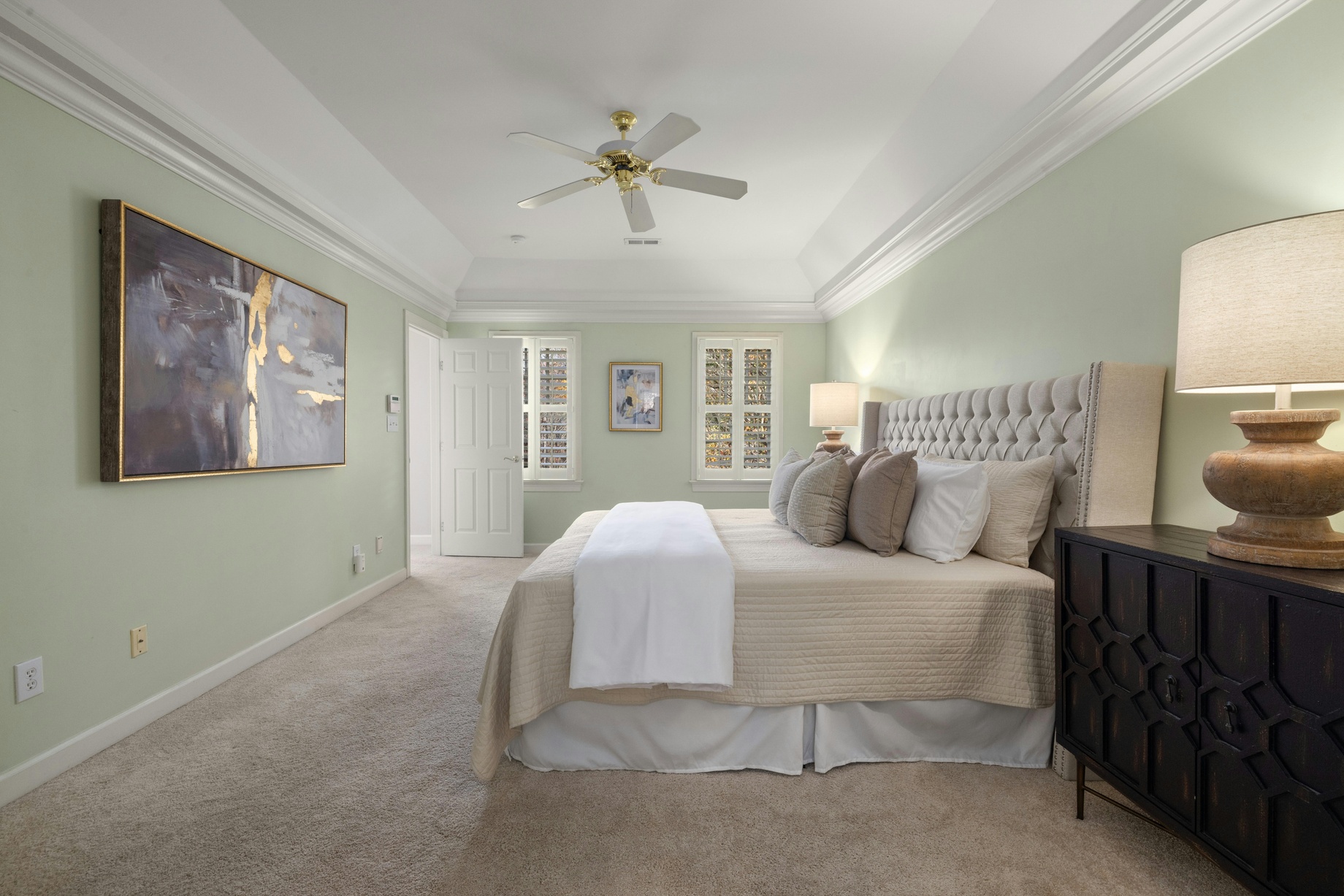
There is a familiar image of carpet that has remained in people's minds for years: a wall-to-wall neutral surface that exists mainly to make a room softer.
Modern carpet tells a much bigger story.
Today, carpet can be a design element, a comfort feature, an acoustic tool, and an important part of how a room feels. With different colours, textures, patterns, and visual effects available, homeowners can use carpet to create spaces that are warm, contemporary, understated, dramatic, or entirely personal.
The transformation starts with the simplest characteristic: softness.
Hard surfaces have their own appeal, but carpet creates an entirely different experience underfoot. That difference can be particularly noticeable in bedrooms, family rooms, home offices, playrooms, and other spaces where people spend significant amounts of time.
The moment someone walks into a carpeted room, the atmosphere can feel more relaxed.
That is not simply a visual effect.
Carpet changes the tactile experience of the space. It can make a room more comfortable for sitting, walking barefoot, or spending time close to the floor.
This makes it particularly interesting for family-oriented spaces.
Imagine a living room where children play, people gather for movie nights, and guests sit for long conversations. Comfort becomes an important part of the room's purpose. Carpet can help create that sense of ease while contributing colour and texture to the design.
Then there is sound.
Modern homes can contain a surprising number of hard surfaces. Flooring, countertops, glass, cabinetry, appliances, and furniture all contribute to the way sound moves through a space.
Carpet can help soften that environment.
Footsteps can feel less pronounced. Everyday movement can sound less sharp. Conversations and activity may feel more contained within the room.
This can be especially useful in bedrooms and upstairs areas where homeowners want a quieter atmosphere.
But the design possibilities are where modern carpet becomes particularly interesting.
Neutral does not have to mean plain.
A carpet with subtle tonal variation can create depth while remaining understated. Texture can add dimension without introducing a strong pattern. A slightly darker tone can ground a large room, while a lighter shade can contribute to an airy atmosphere.
Patterned carpet can take the idea further.
A geometric pattern can introduce a contemporary character. An organic pattern can bring movement and visual softness. Even a subtle pattern can prevent a large expanse of flooring from appearing completely flat.
The important thing is proportion.
A pattern that looks delicate on a small sample can become much stronger when repeated across an entire room. Conversely, a design that appears dramatic in isolation may become beautifully balanced once furniture, lighting, and other elements are introduced.
That is why carpet should be viewed within the room rather than as an individual product.
Look at the wall colour. Consider the furniture. Think about natural light. Examine the cabinetry, doors, window treatments, and artwork.
The carpet should either support those elements or intentionally contrast with them.
It should not accidentally compete with everything else.
Lifestyle also matters.
A formal guest room may have completely different flooring needs from a busy family room. A home with children and pets may require different considerations from a quiet adult household.
Traffic patterns are important as well.
Think about where people walk most frequently. Consider where furniture will sit and how the room will be used throughout the day. The most attractive carpet is not necessarily the most appropriate carpet if it does not fit the demands of the space.
Maintenance expectations should be part of the decision from the beginning.
Homeowners should consider how much time they want to spend caring for the floor and what kinds of daily activity it will encounter.
This does not mean practical considerations have to make the design boring.
Quite the opposite.
Understanding how the room will be used allows homeowners to narrow the enormous range of available choices and focus on the options that make sense.
Carpet can also work alongside other flooring types.
A home does not have to be entirely carpeted to benefit from it. Hardwood can establish a strong foundation in living areas while carpet creates a softer environment in bedrooms. Different materials can give individual rooms their own personalities while still contributing to an overall design.
The transition between flooring types can even become a deliberate architectural detail.
An area rug can provide another layer of flexibility.
A rug placed over hardwood can introduce the softness associated with carpet without covering the entire floor. It can define a seating area, add colour, and create a visual connection between furniture pieces.
This means homeowners have several ways to introduce softness into a home.
The choice ultimately depends on what the room needs.
For homeowners in Chantilly, VA, K&K Hardwood Floor, Inc. can help explore carpet and flooring options designed around both aesthetics and everyday living.
Carpet is no longer simply the safe choice.
It can be bold. It can be subtle. It can be luxurious, casual, modern, traditional, or almost invisible.
Most importantly, it can make a room feel different the moment you step inside.


